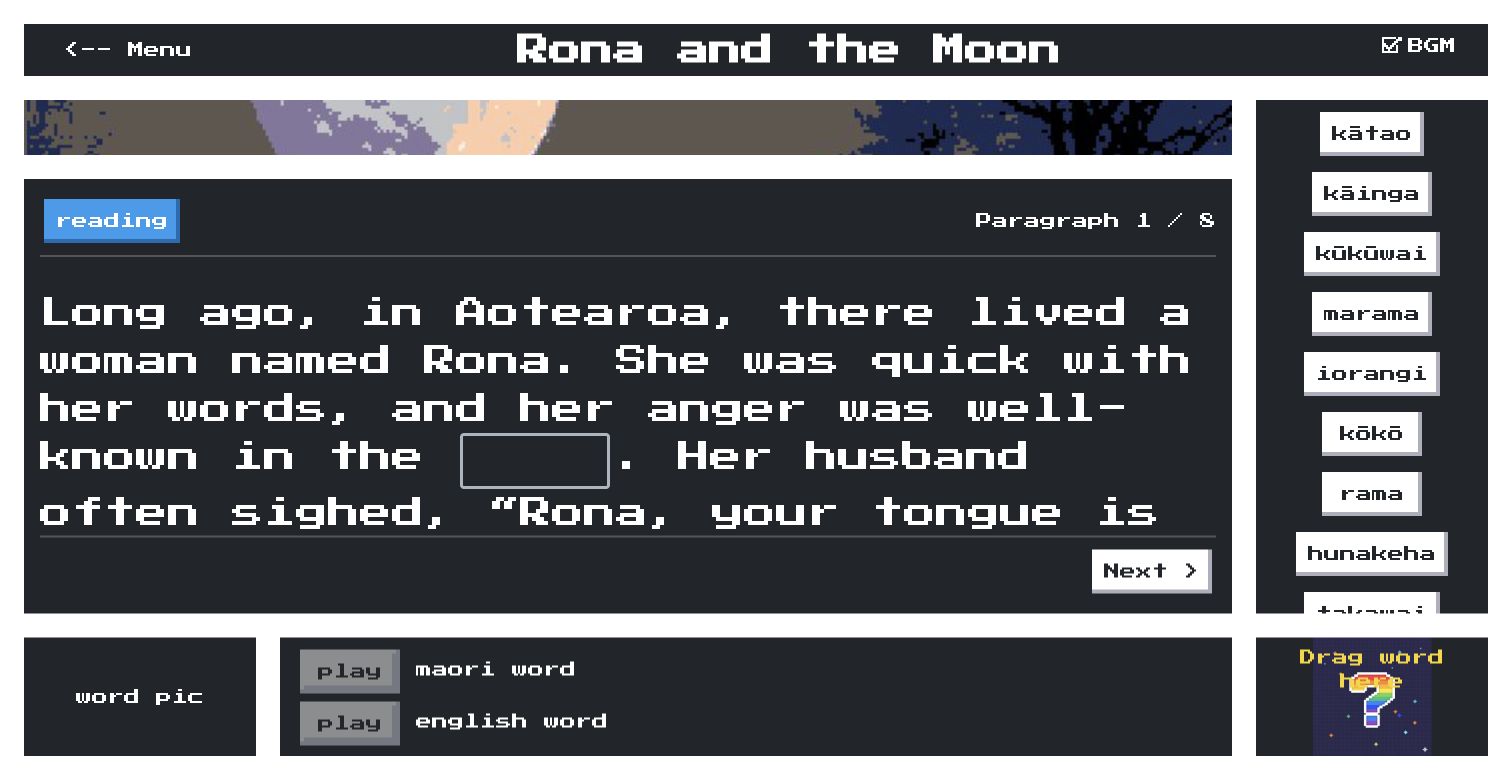
Story Filler combines Māori stories, a word bank, illustrations and pronunciation audio. It connects a React frontend, Django API and administration, PostgreSQL data and uploaded media.
Architecture. I moved the public application to managed hosting to reduce the infrastructure I had to operate, while keeping compute, data and media separate.
Delivery. My implementation separates Terraform configuration from application image releases, with independent frontend and backend pipelines.
Verification. During the September review, I used AI assistance to investigate a blocked image release and checked the fix through tests, scanning and deployed API reads.
Originally a course project, Story Filler is now a personal infrastructure and delivery case study alongside my enterprise experience.
I published the migration rationale in May 2026, followed by an article on CI/CD and Terraform. Read the two original articles alongside this case study, which adds the September implementation review and deployment evidence.
The public application · Rona and the Moon · Story view captured 28 September 2026.
02 / Architecture
The workload stayed small. The operating model changed.
Local environments expose networking, storage and workload lifecycle directly. Managed hosting reduces the infrastructure operated for the public application, while configuration, dependencies and data remain project responsibilities.
The public deployment
Compute, relational data and media have separate homes.
Object storageGoogle Cloud StorageImages and pronunciation audio
The browser requests assets from Pages, API responses from Cloud Run and public media from GCS. Django accesses Neon and integrates with GCS for media management.
These historical manifests describe single-replica workloads. Current frontend source supports /story-filler/; the historical images were not rebuilt or rerun in this review. Configuration review notes record the remaining verification boundaries.
The development feedback loop
One browser origin; service names inside the network.
Configuration checked
ClientBrowserlocalhost
→
Shared entry pointNginx :80Pages, API, admin and media
↓ Routes to frontend and backend
FrontendVite :5173Source mount + HMR
BackendDjango :8000Source + media mounts
DatabasePostgreSQLNamed data volume
Django → PostgreSQL as db
Nginx → Vite WebSocket for HMR
Browser → same-origin /api/
Database readiness → migrate → start
Compose configuration parsing passed; runtime startup was outside this review. The production-style variant uses built frontend assets and Gunicorn. See the configuration review notes.
Choose what to operate. Make the boundaries explicit.
01
Match compute to a modest workload
Cloud Run is configured for 0–1 instances, 1 vCPU and 512 MiB. Static frontend hosting removes a continuously running frontend service. The aim is a manageable footprint for a personal application.
Accepted costCold starts and a low capacity ceiling. Capacity and operating cost depend on the workload.
02
Keep state outside replaceable compute
Neon holds relational data; GCS holds uploaded media. Releasing a backend image does not require moving those files or database records between containers.
Accepted costMore provider and access-control boundaries. Schema compatibility, backups and restoration remain application responsibilities.
03
Separate infrastructure from application releases
Terraform declares Artifact Registry, the runtime service account, Cloud Run and public invocation. CI selects the commit-tagged image; Terraform ignores changes to that image field.
Accepted costThe image is outside Terraform reconciliation. Neon, media/state buckets and CI identity are prerequisites, so this is a defined IaC scope rather than a complete environment rebuild.
This September retrospective connects the migration account to decisions visible in the implementation; it is not a contemporaneous design log.
04 / Local platform practice
The local work is part of the engineering evidence.
The existing local configurations show service networking, workload lifecycle and persistence directly. Selected source files below make those choices inspectable.
Docker Compose
Networking & iteration
A shared Nginx origin connects the browser to Vite and Django while the backend reaches the database by service name.
Source mounts and HMR for the development loop.
Separate data and media volumes.
Readiness check, migration and startup order.
Same-origin API and frontend path corrections in the review.
Earlier demoHost-run Django / React. Compose starts only PostgreSQL. A simpler full-text story contract.
Maintained applicationSeparate story list/detail responses, paragraphs, word-bank links and media.
Different environmentsThe prototype, local lab and public deployment have distinct setup and verification boundaries.
These files preserve the earlier local implementation. The September review covered configuration, with runtime reproduction outside its scope. Read the review notes.
05 / Delivery
A release should have an observable result.
The backend pipeline connects a source revision to a built image, a vulnerability gate, a Cloud Run update and a read-only check of the deployed public API. Frontend delivery is independent.
01TestDjango + smoke-check tests
02BuildMulti-stage, non-root image
03ScanTrivy severity gate
04DeployCommit-tagged image
05VerifyLive public API reads
A historical release / September 2026
The scanner blocked the first attempt.
Trivy found 12 fixable HIGH findings: ten in Pillow and two in libraries bundled with pip. Image publication and deployment stopped. The fix upgraded Pillow to 12.3 and removed unnecessary installer tooling from the final runtime image after dependency checks. Build tooling stayed in the builder.
The next release passed the same scanning policy, deployed and passed the public API smoke check.
11Backend tests passed
6Smoke-check tests passed
APIPost-deploy check passed
The gate covers fixable HIGH/CRITICAL findings, not every vulnerability. Backend lint and CodeQL are advisory; the independent history secret scan does not gate deployment. A failed post-deployment check does not automatically roll back the service.
06 / Delivery history
A development record, including the failed runs.
Story Filler continues the work from the original private repository, jothep/maori-story-fill. Its cleaned Git history is preserved in the new project. The earlier Actions records stay with their source repository.
Original commits
185
October 2025–May 2026
Cleaned migration baseline
189
The same 185 commits + four September follow-ups
Historical workflow runs
198
126 succeeded · 72 failed
Workflow breakdown, collection notes & downloads
Legacy repository snapshot · 28 September 2026 · 132 distinct source commits across the retained Actions records.
Retained workflow results from the original private repository
Workflow family
Runs
Success
Failure
Earlier backend CI
41
21
20
Earlier frontend CI
48
22
26
Cloud Run delivery
18
6
12
GitHub Pages delivery
37
28
9
CodeQL analysis
50
45
5
Git history credential scan
3
3
0
Initial combined pipeline
1
1
0
Total
198
126
72
The authenticated GitHub Actions API returned 198 completed run records; each reported one attempt. The table includes CI, security scans and delivery workflows. These are workflow completion counts, not deployment counts, uptime measurements or hours worked. The Git baseline includes the original 185 commits once, plus four publication-preparation commits.
The new public repository independently passed frontend and backend delivery and history scanning on 28 September 2026. Its release records are separate from the earlier workflow totals.
Verified release from the new repository
Current project · story-filler
New repository. Separately verified delivery.
The migration code snapshot at 1713b97 contains 190 commits, including the preserved 189-commit baseline. On 28 September 2026, the new repository’s frontend release, backend release and history credential scans passed.
The backend run’s second attempt passed 11 backend tests, six offline smoke-check tests, the image scan and public API checks. Image 1713b97 reached Cloud Run revision 00028-gdm with 100% of service traffic. The existing service and runtime configuration were retained; only the image changed.
The new application URL was checked in a browser from the story list through a story detail, including its image and text. Full gameplay and audio behavior were not tested.
AI assisted the September review, implementation and documentation. The useful outcome is an inspectable chain from a problem to a verified change.
Frame the work
I set the direction: preserve the existing project, prioritize valuable improvements, keep credentials out of public history, and distinguish implementation from deployment evidence.
Investigate and implement with assistance
The work used AI to trace configuration and dependency behavior, add secret scanning and API checks, and prepare a bounded image fix. Generated suggestions were checked against source, runtime behavior and pipeline results.
Keep the verification visible
The failed scan and successful retry remain separate records. Tests, image scanning and public API checks support the change; they do not prove untested behavior. Production credential rotation and administrator access were also confirmed during the review.
In my July essay, Stop Asking What AI Can Do. Ask What You Can Verify., I explain why domain knowledge and human judgment matter when using AI. The release investigation above offers a concrete engineering example of that approach.
08 / Evidence & boundaries
What has actually been demonstrated.
These checks span 27–28 September 2026. The cloud delivery row records the new repository’s migration release; the local and infrastructure boundaries remain those of the September review.
Implementation and verification status of the Story Filler project
Area
Status
What the evidence establishes
Cloud delivery
Verified
Verified on 28 September: the new repository delivered the frontend and backend. Image 1713b97 reached revision 00028-gdm with 100% of service traffic; public API reads passed.
Application checks
Verified
The migration release passed 11 backend tests (SQLite/local media), six offline smoke-check tests and six frontend tests (mocked HTTP/audio). Browser checks covered the story list, detail and image; API checks were read-only. Uploads, audio playback and full gameplay were outside the verified scope.
Infrastructure code
Partly verified
Terraform formatting and validation passed; remote state listed four declared resources. No plan, apply or clean-room rebuild was performed in this review.
Local lab & demo
Implemented
Compose configurations parsed and Kubernetes manifests were reviewed. Runtime reproduction was outside this review.
Recovery & scale
Outside scope
No automated rollback, restore exercise, measured SLO, load capacity result or verified zero-cost bill is presented.
Scope of the local configuration review
The historical Kubernetes manifests declare PostgreSQL probes, but not application probes, Ingress TLS or autoscaling. Frontend source now supports /story-filler/; historical image tags were not rebuilt or exercised in this review.
Compose parsing passed. Non-root access to host mounts and newly created media volumes was not runtime-verified. The earlier demo has a separate API contract; its empty test scaffolds are not counted as coverage.
Historical release records
The public historical verification summary records the blocked image release, remediation and subsequent checks. Original Actions logs remain in the private repository; the delivery history above includes publicly accessible aggregate downloads and separate new-repository runs.
These two Medium articles record the project's earlier architecture and delivery choices. Start with the migration rationale, then the pipeline design; use the current case study and verification record to follow what changed.
Why a solo-maintained application moved from a Kubernetes lab to static frontend hosting, Cloud Run and Neon. The central decision was to reduce the infrastructure to operate while keeping compute, data and media separate.
How separate frontend and backend workflows take changes through validation, build and deployment, with Terraform managing the declared cloud infrastructure. A small project puts familiar enterprise delivery practices into a simpler operating model.
How the published articles relate to today's project
The articles retain their original titles and describe the project at publication. It is now named story-filler, with a new public repository and application URL. The migration article describes S3-compatible storage; the current media backend is GCS.
The September review makes the verification scope more precise: Terraform covers defined GCP resources rather than a complete environment rebuild, backend lint is advisory, and image scanning gates fixable HIGH/CRITICAL findings. A zero-cost bill, high-availability guarantee, measured DORA performance and enforced branch protection are not established by this case study. See the current evidence and boundaries.